Showing posts with label writing process. Show all posts

Friday, November 18, 2016

Guest Author: Andrew Joyce on Researching His Historical Novel "Yellow Tail"

Today's guest author conducted painstaking research into his three novels and shares his methods here for anyone aspiring to write a historical novel or any novel which has its basis in reality. I have done the same research myself for both of my novels. I am a stickler for accuracy, and although I trusted my knowledge on Alzheimer's disease and competitive swimming, I still spent months researching these topics. The last thing a writer wants to  learn in a review or reader mail is that she messed something up. It damages your credibility and takes the reader out of the story. I'll let Andrew Joyce tell you more about this.

***

My name is Andrew Joyce and I write books for a living. I would like to thank Marianne for allowing me to be here today to promote my latest, Yellow Hair, which documents the injustices done to the Sioux Nation from their first treaty with the United States in 1805 through Wounded Knee in 1890. Every death, murder, battle, and outrage I write about actually took place. The historical figures that play a role in my fact-based tale of fiction were real people and I use their real names.Yellow Hair is an epic tale of adventure, family, love, and hate that spans most of the 19th century. 

Through no fault of his own, a young man is thrust into a new culture just at the time that culture is undergoing massive changes. It is losing its identity, its lands, and its dignity. He not only adapts, he perseveres and, over time, becomes a leader—and on occasion, the hand of vengeance against those who would destroy his adopted people. 

Now that the commercial is out of the way, we can get down to what I really came here to talk about: the research that goes into writing an historical novel or an action/adventure novel that uses an historical event as a backdrop.

I want to say that I learned the hard way how important proper research is. But it wasn’t really that hard of a lesson. In my first book, which takes place in the last half of the 19th century, I made two mistakes. I had the date of an event off by one year and I had my hero loading the wrong caliber cartridge into his Winchester rifle. I would have gone blissfully throughout life not knowing how I had erred if not for my astute fans. Both mistakes were quickly pointed out to me in reviews of the book. One guy said he would have given me five stars if not for the wrong caliber bullet mistake. I had to settle for only four stars. Lesson learned!

Before I get into telling you about the year-long research I did for Yellow Hair, I’d like to tell you how I researched my second and third books and describe what that research entailed.

My second book was a western and the protagonist was a woman. The research took about three months. I had to know everything from women’s undergarments of the late 19th century to prison conditions for women in those days. (I sent my heroine to jail.) That kind of research was easy. Thank God for the internet. But then I had to do some real research. Molly (my protagonist) built up her cattle ranch to one of the largest in Montana, but she and her neighbors had nowhere to sell their beef. So Molly decided to drive her and her neighbors’ cattle to Abilene where she could get a good price. She put together the second largest herd on record (12,000 head) and took off for Abilene.

That’s when I had to really go to work. I wanted my readers to taste the dust on the trail. I wanted them to feel the cold water at river crossing. I wanted them to know about the dangers of the trail, from rustlers to Indians to cattle stampedes.

This is how I learned about all those things and more. First of all, I found old movies that were authentic in nature. I watched them to get a feel for the trail. Then I read books by great authors who had written about cattle drives to soak up even more of the atmosphere of a cattle drive. That was all well and good, but it still did not put me in the long days of breathing dust and being always fearful of a stampede.

That’s when I went looking for diaries written by real cowboys while they were on the trail. After that, I found obscure self-published books written by those cowboys. Then it was onto newspaper articles written at the time about large cattle drives. That’s how I had Molly herd the second largest cattle drive. I discovered that the largest was 15,000 head, driven from Texas to California in 1882.

My next book took place in the Yukon during the Klondike Gold Rush of 1897. Here new elements were added such as wolves and the extreme weather as adversaries. Dogsledding was also involved. I have seen snow only three times in my life and I have never dogsledded. I knew even less about wolves. I had to learn about those things. I had no idea what it was like to travel across a wilderness on a dogsled at seventy degrees below zero. I also had to acquire knowledge about the dogs themselves, especially the lead dog. I learned about all that by doing the same things I did for my second book. The old diaries were the most helpful. As to the gold rush, there was plenty of material in the form of self-published books by some of the participants. Some were never even published, but I found copies of them in the archives of universities and historical societies. Again, newspaper stories printed at the time were very useful. Concerning wolves . . . I read everything I could get my hands on about wolves—their habits, the pack hierarchy, the alpha male, and the different jobs or tasks the males and females have while hunting.

Now we come to Yellow Hair. As I mentioned above, the book is about the Sioux Nation from 1805 to 1890. I had to know both points of view, the white man’s and the Sioux’sGetting to know the whites’ take on things was easy. There are many, many books (non-fiction) that were written at the time. I even found a book written by Custer detailing his strategy for wiping out the Sioux entirely. That was hard reading. And, again, there were universities and historical societies whose archives were a great help.

As to the Sioux’s point of view, there are a few books that were dictated to newspapermen years later by the Indians that took part in the various battles that I weave into my story. I found a lot of material from Native American participants of the Little Big Horn, written twenty to thirty years after the fact.

But I wanted to immerse myself in the Sioux culture and I wanted to give them dignity by using their language wherever possible. I also wanted to introduce them by their Sioux names. So, I had to learn the Lakota language. And that wasn’t easy. There is a consortium that will teach you, but they wanted only serious students. You have to know a smattering of the language before they will even deign to let you in. I had to take a test to prove that I knew some Lakota. I failed the first time and had to go back to my Lakota dictionary and do some more studying. I got in on my second try.

I’m running out of space, so I reckon I’ll wrap it up. I hope I’ve given you a little insight into the research process. It’s time-consuming and sometimes frustrating. But it is also a blast. Every new discovery is like finding the motherlode.

I’d like to sign off with another commercial. The three books I alluded to above are:
• Molly Lee

I would like to thank Marianne once again for having me over and you good folks for tuning in.

Andrew Joyce

 About the Author

Andrew Joyce left high school at seventeen to hitchhike throughout the US, Canada, and Mexico. He wouldn’t return from his journey until decades later when he decided to become a writer. Joyce has written five books, including a two-volume collection of one hundred and fifty short stories comprised of his hitching adventures called BEDTIME STORIES FOR GROWN-UPS (as yet unpublished), and his latest novel, YELLOW HAIR. He now lives aboard a boat in Fort Lauderdale, Florida, with his dog, Danny, where he is busy working on his next book, tentatively entitled, MICK REILLY.

Monday, November 7, 2016

Write What You Know and Then Some - Researching My Young Adult Novel Swim Season


My daughter had been swimming for five years when I came up with the idea to write a novel about girls’ varsity swimming. Sitting on those cold, hard bleachers season after season gave me more than a sore you-know-what. It sparked my imagination, creating a story line and cast of characters that would show in written form what high school swimming is like for these girls. As I wrote the story, they were always at the heart of it. I wrote it for them. And I wanted it to be as accurate and realistic as possible.
 
In many ways, writing Swim Season was natural and easy. Through many autumns, I’d watched my daughter and her team swim their hearts out, beside parents rooting for their own swimmers. In the beginning, I knew next to nothing about the sport, about swim meets. But as the years went on, I learned. 

I learned simple things, like the order of events. Try finding your kid on a pool deck swarming with dozens of young swimmers in caps and goggles when you’re not sure which event it is, or whether your child is swimming in it or not. Impossible. 

I chaperoned the waiting rooms where dozens of youngsters waited for their next event. Try to keep all that adrenaline in check.
 
I volunteered to time the races, and stood at the blocks, race after race, helping to make things run smoothly, making sure the right kid was in the right lane.

I helped out at the concession stand, serving up bagels and cream cheese.

I was involved with the fundraising activities, Picture Day, and put together the program for Senior Night for a number of years. 

I went to 99 percent of the meets with my husband (we missed one when it was an hour away from our home on a week night.) 

Most of my daughters’ friends were swimmers, so I got to know several of them up close and personal. They were an intelligent, ambitious, fantastic set of young women. When my book was criticized by a critique partner because the characters seemed “too smart,” I responded with, “Well, those are the girls I know.” The team had the highest GPA of all athletic teams at the high school year after year. Yes, swimmers are smart.

I took advantage of coaches I knew personally (and some I didn’t) to pick their brains, try out the story’s premise for believability, and tweak the details. Many thanks go to the following New York State coaches: Frank Woodward, Middletown High School; Justin Wright, Monroe-Woodbury High School; Jeremy Cuebas, Minisink Valley High School; and Danielle Lindner, former coach for Mount Saint Mary College, in Newburgh.

Early in the process, I sent out a tweet on Twitter, asking swimmers to complete a questionnaire for a new book about varsity swimming. Almost a dozen young swimmers – girls and boys -  responded, and we started dialogues that provided great background for my story. Some of them went on to become beta readers. All of them were thrilled at the idea of a book about them, about their sport.

As a reader, when the answers weren’t so simple I resorted to books. Michael Phelps’ biography No Limits: The Will to Succeed, with Alan Abrahamson, was more than worth its cost. Likewise, Amanda Beard’s memoir In the Water They Can't See You Cry gave me insight into how to build an Olympic silver medalist. Instruction books, such as Terry Laughlin’s Total Immersion, with John Delves, and Tracey McFarlane’s Mirande’s Championship Swimming with Kathlene Bissell, taught me the fine-tuning of technique. The Champion’s Mind: How Great Athletes Think, Train, and Thrive, by Jim Afremow, PhD, was instrumental in creating Aerin’s mental game. For inspiration I turned to Swimmers: Courage and Triumph by Larry Thomson.

Then there was the time when I decided to swim the race at the heart of my story. For a while I was taking Aquasize classes at my local YMCA. One day I got the idea to try to swim 500 yards. I wanted to see if I could do it, how long it would take, and how I would feel during and afterwards. I have never swum competitively, although I have always loved to swim and am capable of doing the freestyle. My first 500 clocked in at 30 minutes. I stopped after every length to catch my breath and chat with the other ladies in the Aquasize class. I kept at it, though, and after a few weeks managed to complete the 500 in 16 minutes, which was phenomenal for me. Of course, the time to beat in Swim Season is 4:52.50, which, for me, was in never never land. But, as a middle-aged woman with below-average fitness, I was proud of my achievement. In the end, unfortunately, it exacerbated my repetitive strain injuries and I had to give it up.

Writing Swim Season was an endeavor born of many resources, personal and professional. It’s recommended that we write what we know. I knew a lot about competitive swimming as a Swim Mom, but that was not enough to compose this story. I needed to reach out to many others - swimmers, coaches, parents, Olympians, and a psychologist – to nail the details. All of this, I believe, leads to a more credible, believable story with depth. 

Swim Season is available in paperback and Kindle on Amazon.

Thursday, October 27, 2016

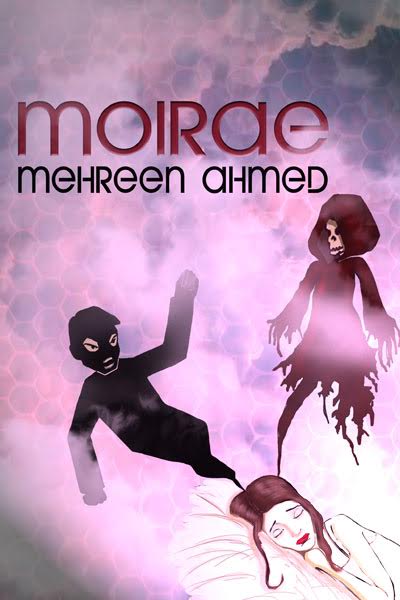
Guest Post: Author Mehreen Ahmed on The Therapeutic Nature of Writing


by Mehreen Ahmed 


Why do people write? The answers certainly vary from writer to writer, but writing evolved alongside a popular and a well-established oral tradition. Traces of the earliest writing system was first found in Mesopotamia, Iraq around 3200 BC. However, there is much debate around this, as some believe that the earliest script was found in South India. Wherever it was, it is obvious that only one form of communication did not suffice. Valuable information would often be lost because of a lack of documentation. Preservation of data in scripted words proved to be more lasting than the spoken medium. The archives today would be empty otherwise and history would remain forgotten. 

A friend of mine had once told me how writing got her through many a troubled situation. There was a time when she felt totally helpless because of her husband’s acute anxiety. At this juncture in her life, it was writing that helped her tremendously. She often sat down at the computer and jotted random, non-linear thoughts without caring much about grammar, or punctuation. or spelling. She continued this for a while until a pattern emerged. An eventual plot began to show. That plot turned itself into her first book. This gave her pleasure beyond measure as a new window of opportunity and happiness opened for her. One book then led to many books. 

If sad thoughts can be written in words, then sometimes they can help in difficult situations. That is the whole point of keeping a diary. My friend had no idea that writing could bring her such sweet relief. In a way, writing acted as her counselor or a psycho-therapist by giving her a platform to vent her unhappiness. Her life changed dramatically after that. She became a writer and found a way to help other emerging writers as well. 

How does writing act as therapy? There is no specific research guidelines to prove exactly what happens to the human brain when it undergoes such activity. Researchers have tried to find out brain functions and effects of expressive writing. Advances in psychiatric treatment (2005), Vol 11, 338-346, published an article written by Karen A. Baikie and Kay Wilhelm. A study elaborated in this article shows a correlation between writing and mental and physical health benefits. Participants were asked to write about their deepest thoughts and feelings of traumatic situations. They were also asked not to care about grammar, spelling, and punctuation,. This research found long term benefits in both emotional and physical health outcomes: a reduction of mood swings and depressive symptoms such as withdrawal. And in physical health a notable reduction of blood pressure. 

In a nutshell, therapeutic effects of writing were found beneficial to human health, generally. But even without delving into too much scientific detail, we can speak from our own experience that writing is good for the soul and for the mind. It gives us pleasure just to take flight on the wings of imagination; creating fantasies, otherwise impossible. Thoughts that would leave indelible marks long after we have passed away. Imagine if Shakespeare had not written a word. Not only would there be a vacuum in the literary world, but what a lonesome and boring place this would be. 

And as imagination bodies forth
The forms of things unknown, the poet’s pen
Turns them to shape and gives to airy nothing
A local habitation and a name.
-William Shakespeare, Midsummer Night’s Dream

About the author
Queensland writer, Mehreen Ahmed has been publishing since 1987. Her writing career began with journalism and academic reviews and articles. Her latest work, Moirae, is available on Amazon.

Follow Mehreen Ahmed

Monday, March 21, 2016

You are Your Own Best Editing Tool

photo by Monika Wisniewska via Dollar Photo Club
When I first started writing, I had very few tools: a typewriter, dictionary, and thesaurus. I also used notebooks and pencils (and still do.) Writing was a long, laborious endeavor but I loved it. After the emergence of the PC, I longed for one of my own because I wanted Microsoft Word. Imagine: a word processor with built-in editing tools, including a dictionary and thesaurus. Now we have handheld devices that allow us to do everything we can on our PCs and Macs at any moment, wherever we are. A miracle!

I’d guess most of us thought writing would be a lot easier with all of this technology, and it is, but while these editing tools are useful they are no replacement for human intelligence, skill, and experience.

I use Word’s proofreading tools and Grammarly for my initial spelling and grammar checks. One of the frustrating things about rewriting and revising my current WIP Swim Season is that my editing tools often don’t understand what I’m writing, and bring to my attention issues that are not actual issues. This wastes my time, energy, and physical stamina for keyboarding. While they provide easy ways to identify problems quickly so I can move on to the deeper stuff, each can create its own time-consuming and frustrating difficulties because they don’t understand what I’m writing or don’t get the “lingo.” Here are some examples:

Grammarly, which helps identify 250 grammatical mistakes, points out possible contextual spelling errors, and offers vocabulary enhancement, doesn’t understand swimming terminology. Each time I use a word in this context, it tells me I’m not using it correctly. For example, “heat” usually relates to temperature, but in swimming this word refers to “one of several preliminary contests held to eliminate less competent contenders,” (see Merriam-Webster.) A swim meet consists of 12 events, some of which may have as many as 6 or 7 heats or more. The word “heat” is used a lot, and not incorrectly, but each time it shows up Grammarly suggests I reconsider its use. I don’t. Still, I must take the time to address each occurrence and it slows me down. I haven’t found the “ignore all” option that exists in Word.  

“Event” is another troublesome word. In Swim Season there are 18 meets, each with 12 events, so the word “event" comes up many times. Grammarly does not know this and at every occurrence alerts me that the word is “overused.” It’s not. It’s an essential plot element. Yet, I examine each use to make sure I can’t use another word. Most times I can’t and wouldn’t want to.  

When I use the word “taper,” I get this message: “Did you mean paper? The word taper doesn't seem to fit the context. Consider replacing it with a different one.” Taper, in swimming, as in most sports, refers to the practice of reducing exercise in the days before an important competition to prepare for optimal performance. My team tapers. Ignore, and move on.   

Here’s another example: One of my characters is called “Coach.” Grammarly stops on this word at every appearance and advises me to change it to “The coach.” It does not recognize “Coach” as the name of a character. I ignore this advice and move on.  

Grammarly doesn’t evaluate for the passive tense in its creative writing/novel mode. To perform this check I need to work in another writing style, i.e. essay or business. I find this odd. Why would it not check for the passive voice in a novel? Isn’t passive voice a major issue in most novels?  


Yet, I am amazed at Grammarly's ability to find typos, misspellings, and other grammar messes after three previous editing passes.

Use of Word’s grammar and spelling checker poses its own set of unique problems. Swim Season is written in the first person. Every time the checker comes upon “I,” “me,” or “myself” it suggests I change the pronoun. How many times do you think these pronouns appear in a 150,000-word novel in the first person? How aggravated do you think I get each time I’m told to address this issue? Needless time is spent “ignoring” this suggestion.   
Another Word problem is that it does not allow me to use contractions. It flags "I can't" and suggests I change it to "I cannot." I won't. And I don't. But weeding through all of these notifications is exhausting.

These otherwise excellent editing tools are worth every cent I paid for them, but it’s imperative I remember they don’t do all the work. I can’t depend on them to capture all of my spelling, grammar, and other problems. While both have caught many errors in my WIP that I’ve gratefully cleaned up, I know the most valuable tools I possess as a writer are my own eyes, knowledge, and experience. After all the high-tech, fancy tools have worked their magic, I still have to examine each word, its use, and its placement in my manuscript, and revise and edit as needed to make my book the best I possibly can. 

Monday, March 7, 2016

Running for the Finish Line: Revising a Novel's First Draft


I'm thick in the middle of rewrites and revisions for my Young Adult sports novel Swim Season and coming up for air to share a little of my progress. I truly enjoy this part of the writing process. It stretches my mental muscles and brings me deep into the cellular level of the story. Here's where I fine-tune tension, clarify ambiguities, and make the book the best it can be. It's a long process, made even longer and more taxing by my repetitive strain injuries, which rear their ugly head often and demand attention. I take lots of breaks.

Turning a 156,889-word first draft into a polished novel requires many steps. The first is a full read of the manuscript. I've been working on this book for years and lost track of its beginning pages long before I wrote "The End" on the last page. It's been months since I've read most of it, and I've forgotten parts of it.

My strategy for writing this book was to keep writing, to move forward without looking back. I didn't want to get bogged down in details that would get in the way of completing it. If I ran into a problem, had a question, or didn't know where I was going, I skipped over that part and kept writing. Past projects had taught me that rewriting as I write and double checking facts and details during the writing process slow me down, and ensure I'll never finish. I end up cutting out too much, wasting my words and work. Not good since I'm living with RSIs. Every word has to count. I don't write for the trash can.

I found it's easier and less painful to avoid the computer and do as much work on paper as possible. I print out a copy of the manuscript and run through it a few times the old-fashioned way, with red pens, sharp pencils, and a big pink eraser. During my first read through I made note of typos and grammar issues, errors and inconsistencies, and clarified plot points, character traits, etc. On my second read, I analyzed all the swim meets, assigned team names, and created meet sheets and scores. It was time-consuming but necessary. In the end, I may eliminate much of that data but it was info I needed to understand my team and tell the story. On the third pass, I clarified some of the open-ended areas, such as the color of a character eyes, the whereabouts of my heroine's mother, and the coach's role in the story. That often required research, which enriches the story and gives it more depth.

The bulk of my process involves fine-tuning the manuscript. For this, I rely on Bobbie Christmas' Find and Refine Method as described in her excellent writer's manual Write in Style. I followed this method for my novel Blue Hydrangeas. It's easy to use and understand and transforms my writing into tight, concise prose. But the process is slow, especially for a 156,889-word manuscript.

For example, Christmas suggests eliminating as many adverbs as possible. Her method: use the Find function in Word to locate all words ending in ly, the telltale sign of the dreaded adverb, and evaluate each one to determine if it can be eliminated or replaced with a stronger word or words. I discovered 1,800+ occurrences, not all of them adverbs because the search includes family (71), Emily (40), and only (117) and other acceptable ly words. I examined each one and whittled the number down to 614. It took hours but makes a better book.

The process continues with strategies to eliminate passive writing, ambiguous pronouns, and other sloppy or lazy writing techniques that slip into a first draft. I've eliminated 5,000+ words and have only just begun. I already see an improvement. I find the process exciting and invigorating even though it aggravates my RSIs and threatens to throw me into a tailspin of carpal tunnel syndrome, tendinitis, and bursitis pain that not only affects my writing but every other aspect of my life. It's a slippery slope, but with pain management strategies and adequate rest periods, I plod on. I decided long ago that I will finish and publish this book no matter how long it takes. I started it in 2011, and almost five years later see the finish line.


***

Don't miss a word! Follow my Adventures in Publishing.
Subscribe now and receive a free e-copy of
Blue Hydrangeas, an Alzheimer's love story.
Rated 4.7 stars on Amazon, 141 reviews.

Monday, February 29, 2016

When a Place is Simply a Place: Thoughts on Proper Names, the Writing Process and Research


I picked up this book from the library the other day. No, I am not considering a new career in corrections. It's for research. I have this great looming question about a character in Swim Season that's been bugging me for ages and I finally had to put it to rest. 

Devon, my heroine's mother, is incarcerated. An Army nurse with two tours of duty in the Middle East, Devon came home with complications from a blast injury, chronic pain, opiate addiction, and Post Traumatic Stress Disorder. Desperate, depressed, and in pain, she resorted to stealing drugs from her employer, from her patients who needed them. Once caught, she took a plea deal to three counts of felony falsifying business records in the first degree, and three counts of misdemeanor petit larceny. The felony charges carry a potential sentence of 1⅓ to three years in state prison.
In describing this situation I struggled with how to refer to Devon's whereabouts in the story. Was she in prison? A correctional facility? A drug treatment center for convicted felons? Jail? Every time I referred to her location I used different words. It confused me, and I knew it would confuse my readers, so I questioned the correct terminology. I’m a stickler for details and this was one detail I wanted to get right.
I thought coming up with the right terminology would be simple. I did some internet research and surprisingly couldn't find a satisfying answer. I then referred to my local library and came up with one book that I thought would give a simple description of the New York State prison system, the book in the picture. I checked it out and two minutes after I cracked it open realized it did not hold the answer for me either.
In the meantime, while waiting for the book to come in, I had an epiphany: Since I was having so much difficulty describing where Devon was perhaps Aerin, my heroine, was also struggling. After all, she's just a kid, and the thought of her mother locked away in prison is more than she can bear. Perhaps she can't bring herself to speak the words prison, correctional facility, drug treatment center, jail. Perhaps the best she can do is refer to the place that holds her mother as simply that: the place.
This was not a new idea. Jack Harmon, my hero in Blue Hydrangeas, faced the same quandary. Confronted with placing his beloved wife Sara in an assisted living facility, Jack can’t bring himself to speak those words, and refers to Sara's new home as the place.
This approach relieves me of a troublesome problem. I'm no longer tasked with figuring out the proper terminology of describing where Devon is (correctional facility is the proper term I finally learned) and Aerin's inability to speak the words adds an additional layer of tension to the story and deepens her characterization. She mentions correctional facility once and from then on it's the place, conjuring all kinds of images and emotions.
This is the depth and length of thought and research that goes into my writing. Something that seems so simple and inconsequential becomes a time-consuming, analytical issue. In the end, the solution seems so simple it's hard to believe it took so long to get there.
Funny thing is, it's the best part of writing the story. 
***
Don't miss a word! Follow my Adventures in Publishing.
Subscribe now and receive a free e-copy of
Blue Hydrangeas, an Alzheimer's love story.
Rated  4.7 stars on Amazon, 140 reviews.